
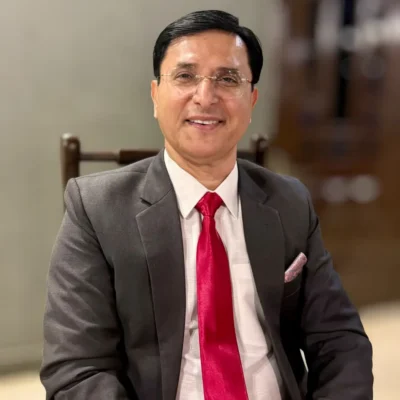

In Pakistan’s academic landscape, the progress of a discipline is often shaped not only by institutions, but by educators who dedicate decades to teaching, research, mentorship and institutional development. Prof. Dr. Ghulam Akbar Mahesar represents this tradition of academic service through a career spanning 25 years of teaching and research, 12 years of administrative service, and more than six years of leadership across various departments and institutes.
A distinguished political scientist, Professor (BPS-21) and Chairman of the Department of Political Science at the University of Sindh, Jamshoro, Prof. Dr. Mahesar has built his professional journey around the advancement of political science and higher education. His work reflects a continuing commitment to knowledge, research, academic leadership and the development of students who engage with the complex political realities of Pakistan and the wider world.
A Career Built on 25 Years of Teaching and Research
For a university academic, longevity becomes meaningful when it is accompanied by sustained intellectual engagement. Prof. Dr. Mahesar’s 25 years of teaching and research experience represent a substantial period of contribution to political science education.
Over the course of his academic career, he has remained engaged with the fundamental questions that shape political science — from governance and democracy to international relations, diplomacy and conflict resolution.
His experience as an educator places him at the intersection of knowledge and mentorship, where theoretical understanding is connected with the political developments and challenges that shape societies.
Leadership at the University of Sindh
Prof. Dr. Mahesar currently serves as Professor (BPS-21) and Chairman of the Department of Political Science at the University of Sindh, Jamshoro.
His administrative journey includes 12 years of administrative service, alongside more than six years of leadership across various departments and institutes. These responsibilities have added an important institutional dimension to his academic career.
Academic leadership extends beyond classrooms and research papers. It involves contributing to institutional direction, supporting academic environments, working with faculty and students, and helping departments develop a culture where teaching, research and intellectual discussion can flourish.
Through his leadership experience, Prof. Dr. Mahesar has continued to contribute to the broader academic environment of the University of Sindh.
Research Exploring Pakistan, India and Kashmir
At the heart of Prof. Dr. Mahesar’s academic profile is his specialization in political science and his research engagement with one of South Asia’s most complex political questions.
He holds a Ph.D. in Political Science from the University of Sindh, with research focused on Pakistan-India dialogue and the Kashmir issue.
This area of research reflects his academic engagement with subjects including diplomacy, conflict resolution, democracy, governance and international relations — fields that remain central to understanding political relationships within South Asia and beyond.
His doctoral research demonstrates an academic interest in examining political challenges through research and dialogue, contributing to broader scholarly discussions surrounding Pakistan’s regional and international affairs.
From Classroom Knowledge to International Dialogue
Prof. Dr. Mahesar’s academic exposure has also extended beyond Pakistan. He participated in the prestigious International Visitor Leadership Program (IVLP) of the U.S. Department of State, an international professional exchange experience that provided an opportunity for engagement in academic and policy dialogue in Washington, D.C.
International academic exposure can broaden perspectives by bringing educators and scholars into contact with different approaches to governance, policy, institutions and public affairs.
For a political scientist, such engagement creates opportunities to examine political and institutional questions from multiple perspectives while connecting local academic work with wider international conversations.
Political Science as a Discipline of Understanding
Political science is not limited to the study of governments or political institutions. It is also an exploration of how societies make collective decisions, how institutions function, how power is organized, and how relationships between states influence the world.
Prof. Dr. Mahesar’s academic journey has developed around these broader dimensions of the discipline.
His teaching and research interests connect political science with questions of democracy, governance, diplomacy, international relations and conflict resolution, allowing students to approach political issues through an academic and analytical lens.
This role becomes particularly important in a rapidly changing world where political developments increasingly influence economics, technology, diplomacy, security and social life.
The Teacher Behind the Academic Leader
Titles such as Professor and Chairman represent institutional responsibilities, but the influence of an academic is often most visible through students.
Across 25 years of teaching, Prof. Dr. Mahesar has had the opportunity to engage with generations of students studying political science and related areas of social inquiry.
The university classroom can become a space where students learn not simply what political systems are, but how to question assumptions, examine evidence, understand competing perspectives and develop informed academic viewpoints.
This commitment to education remains an important part of his professional identity.
Administrative Experience With an Academic Perspective
Leading an academic department requires an understanding of both educational priorities and institutional responsibilities.
Prof. Dr. Mahesar’s 12 years of administrative service and experience of leadership across various departments and institutes have added depth to his professional journey.
His career demonstrates the progression from teaching and research into broader institutional responsibilities, where academic leadership requires coordination, planning, communication and a continued focus on educational objectives.
This combination of scholarly and administrative experience has become a defining feature of his professional profile.
Connecting Research With Contemporary Challenges
The strongest academic work often remains relevant because it addresses questions that societies continue to confront.
Issues surrounding democracy, governance, diplomacy, international relations and conflict resolution remain significant in understanding both national and international affairs.
Prof. Dr. Mahesar’s research background provides an academic foundation for examining these subjects, particularly through the lens of Pakistan’s regional and international context.
His doctoral research on Pakistan-India dialogue and Kashmir further reflects the importance of sustained scholarly engagement with complex political questions that require careful analysis and informed discussion.
A Continuing Contribution to Higher Education
Higher education develops through the combined efforts of institutions, faculty, researchers and students. Academic leaders play a particularly important role in maintaining environments where knowledge can be created, questioned and shared.
As Chairman of the Department of Political Science at the University of Sindh, Prof. Dr. Mahesar continues to operate within this academic ecosystem.
His professional journey — extending across 25 years of teaching and research, 12 years of administrative service and more than six years of leadership experience — reflects a sustained association with the development of higher education and political science.
Inspiring the Next Generation of Political Scientists
Every generation of students enters university with different questions, ambitions and challenges. The responsibility of an academic is to provide them with the knowledge and intellectual tools required to navigate those questions.
Prof. Dr. Mahesar’s continued work in teaching, research and academic leadership contributes to that process.
By engaging students with political science and its relationship with governance, democracy, international relations and diplomacy, he helps create an academic environment where future researchers, educators, policymakers and professionals can develop a deeper understanding of political institutions and society.
A Legacy of Knowledge, Leadership and Academic Service
Prof. Dr. Ghulam Akbar Mahesar’s career is defined by the convergence of teaching, research, administration and leadership.
From earning his Ph.D. in Political Science and researching Pakistan-India dialogue and the Kashmir issue to gaining international exposure through the U.S. Department of State’s IVLP and serving as Professor and Chairman at the University of Sindh, his journey reflects a sustained commitment to academic excellence.
After 25 years in teaching and research, his story continues to be one of intellectual engagement and institutional service — demonstrating how an academic career can extend beyond the classroom to contribute to the development of disciplines, institutions and future generations.
Prof. Dr. Ghulam Akbar Mahesar stands as an example of academic leadership rooted in knowledge, research and service — continuing to shape the study of political science while contributing to the evolving landscape of higher education in Pakistan.



No Comment! Be the first one.