
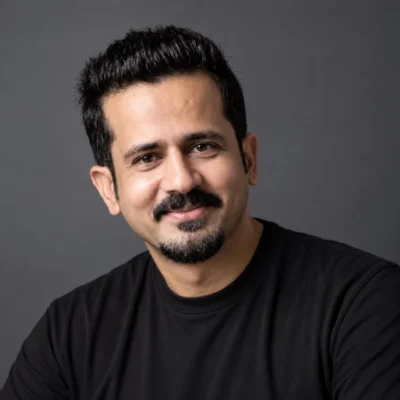

In a world where technology is transforming the way people experience history, Asif Janjua stands at a distinctive intersection of art, technology, documentation, and cultural preservation.
Recognized as Pakistan’s first Photogrammetry Artist, Asif Janjua has spent more than 15 years working in photogrammetry, 3D digitization, and digital preservation. His professional journey has taken him across Pakistan, where he has documented historical, cultural, and significant locations, while his technical expertise has also connected him with international projects in Australia, the United Kingdom, and various European countries.
His work represents a powerful meeting point between the physical and digital worlds.
Historical places exist in physical form, but technology can create new ways to document, study, experience, and preserve them. Through photogrammetry and 3D scanning, Asif Janjua has developed a professional path focused on capturing real-world spaces and objects as detailed digital assets.
For him, technology is not simply about creating something new. It can also become a tool for protecting what already exists.
A Pioneer in Pakistan’s Photogrammetry Landscape
Photogrammetry is a technology-driven process that can transform photographic data into three-dimensional digital representations of real-world objects, structures, and environments.
For Asif Janjua, this field has become much more than a technical profession.
It has become a way of documenting places, capturing details, and creating digital representations of heritage that can potentially be experienced far beyond their physical location.
Being recognized as Pakistan’s first Photogrammetry Artist places his work within an emerging area where visual documentation, 3D technology, digital art, and cultural preservation intersect.
His more than 15 years of experience have given him an extensive understanding of the technical and creative possibilities of photogrammetry and 3D digitization.
More Than 15 Years of Technical Experience
A career spanning more than 15 years in photogrammetry and 3D digitization represents a substantial commitment to a specialized field.
Over this period, Asif Janjua has developed experience in creating digital representations from real-world environments and objects.
His expertise extends across:
- Photogrammetry
- 3D Scanning
- 3D Digitization
- Digital Asset Creation
- Digital Preservation
- Heritage Documentation
- Cultural Documentation
These areas require a combination of technical understanding and visual precision.
The process is not simply about taking photographs. It involves capturing information from the physical world and transforming that information into usable digital representations.
That combination of technology and visual documentation is what makes photogrammetry particularly relevant to heritage preservation.
Documenting Pakistan Through a Digital Lens
Pakistan possesses a vast range of historical and cultural locations.
From historic architecture and archaeological environments to culturally significant places, the country’s physical heritage contains stories that connect generations with the past.
As a Heritage Explorer, Asif Janjua has travelled across Pakistan documenting historical, cultural, and significant locations.
His work gives him an opportunity to approach heritage through a contemporary technological lens.
Instead of viewing heritage only as something that exists in a physical location, digital documentation introduces another possibility: creating a lasting digital representation that can be studied, shared, and experienced through modern technology.
This creates a bridge between physical heritage and the digital generation.
Turning Real Places Into Digital Assets
One of the defining characteristics of Asif Janjua’s work is his ability to transform elements of the physical world into digital assets.
A historical location can exist in one place, accessible only to people who are physically able to visit it.
A digital representation can potentially travel much further.
It can become part of a digital archive, educational experience, research project, film production, game environment, museum initiative, or other technology-driven application.
This is where 3D digitization gains significance beyond its technical function.
It creates another form in which physical places and objects can be represented.
The International Dimension of His Work
Although his heritage documentation has taken him across Pakistan, Asif Janjua’s professional journey has also extended internationally.
His work has contributed to projects in Australia, the United Kingdom, and various European countries.
This international exposure demonstrates the broader relevance of his technical expertise.
Digital production is inherently global. A 3D asset created from a real-world location can be incorporated into a project being developed thousands of kilometres away.
For a specialist working from Pakistan, this creates an opportunity to connect local technical expertise with international creative and technology industries.
Asif Janjua’s career reflects that connection.
From Pakistan’s Heritage to International Productions
One of the notable dimensions of Asif Janjua’s career is his contribution to Hollywood films and international AAA game productions.
His technical expertise has been applied in professional environments where the quality and accuracy of digital assets are critical.
These projects demonstrate how photogrammetry can extend beyond heritage documentation into the global entertainment and digital-production industries.
The same fundamental technology that can help document a historic structure can also be used to create digital environments and assets for films and games.
This versatility is one of the most fascinating aspects of his professional journey.
Contributing to The Jungle Book
Among the international projects associated with Asif Janjua’s early international project work is the Hollywood film The Jungle Book.
His 3D scans and digital assets became part of this early international project work.
The project represents an important example of how specialized 3D digitization expertise can contribute to major entertainment productions.
Behind the visual experiences presented to audiences are often complex processes involving scanning, modelling, digital assets, visual effects, and other forms of technical production.
Asif Janjua’s contribution placed his expertise within that wider international production ecosystem.
The Creative Side of Photogrammetry
Although photogrammetry is strongly associated with technology, Asif Janjua’s professional identity as a Photogrammetry Artist highlights another important dimension: creativity.
Digital scanning is not simply a mechanical process.
It requires attention to visual detail, surfaces, structures, textures, proportions, and the characteristics of real-world environments.
The result is a digital representation that can preserve information about the original subject.
This combination of technical knowledge and artistic observation is central to understanding why photogrammetry can be considered both a technological discipline and a creative practice.
Heritage Explorer: Beyond Conventional Documentation
Asif Janjua’s identity as a Heritage Explorer adds a personal and cultural dimension to his technical work.
His journey across Pakistan is connected with discovering and documenting places that hold historical or cultural significance.
This approach allows technology to become a means of exploration.
Instead of simply observing heritage, he works toward capturing it digitally.
Instead of allowing historical spaces to remain accessible only to those who can physically reach them, digital documentation creates the possibility of presenting them to wider audiences.
In this sense, exploration and preservation become connected.
Why Digital Preservation Matters
Physical heritage can face many challenges over time.
Buildings age.
Materials deteriorate.
Environments change.
Access can become difficult.
Historical details can be lost or altered.
Digital preservation cannot replace the physical heritage itself, but it can create another layer of documentation.
A carefully captured 3D representation can preserve visual information about a place or object at a particular point in time.
For future generations, such records can become valuable references for understanding what existed and how it appeared.
This makes digital preservation an increasingly relevant part of modern heritage documentation.
Making Pakistan’s Heritage More Accessible
One of the broader possibilities behind Asif Janjua’s work is accessibility.
Pakistan’s heritage is distributed across a large and geographically diverse country.
Not everyone can travel to every historical or cultural site.
Digital technologies can help overcome some of those geographical limitations by creating ways for people to engage with places remotely.
Through 3D digitization, heritage can potentially be incorporated into digital platforms, educational projects, virtual experiences, museums, research environments, and other forms of technology-enabled access.
The objective is not to replace visiting heritage sites.
Rather, digital representation can create an additional pathway through which people can discover and understand them.
Preserving Details for Future Generations
Heritage preservation is ultimately about continuity.
Every generation inherits physical and cultural reminders of the generations before it.
Digital preservation can add another layer to that continuity by recording the visual characteristics of places and objects in a format that can be stored, shared, and revisited.
Asif Janjua’s work in this area reflects the potential of technology to support that process.
By documenting historical and cultural locations, he contributes to a broader effort to ensure that digital representations of Pakistan’s heritage can remain available for future audiences.
Connecting Heritage With the Digital Generation
Younger generations increasingly interact with the world through digital technology.
Their experiences of education, entertainment, research, communication, and culture are increasingly influenced by digital platforms.
This creates an opportunity for heritage to enter the same digital spaces.
A historical site represented through 3D technology can potentially become part of a learning experience that feels more familiar to a digitally connected generation.
It can provide another way to explore architecture, cultural spaces, historical environments, and physical details.
This is where Asif Janjua’s work becomes particularly relevant to the future of heritage engagement.
The Intersection of Technology, Art and Culture
Asif Janjua’s career can be understood through three interconnected dimensions:
Technology.
The technical foundation of photogrammetry, 3D scanning, and digital asset creation.
Art.
The visual understanding required to capture and represent the physical world digitally.
Culture.
The historical and cultural significance of the places being documented.
Each dimension strengthens the others.
Technology makes digital preservation possible.
Art helps shape how the digital representation is created.
Culture gives the work its deeper significance.
Together, they form the distinctive professional identity of Asif Janjua.
A Pakistani Specialist on an International Stage
The international dimension of his career also highlights the potential of specialized Pakistani expertise.
His work across projects in Australia, the United Kingdom, Europe, Hollywood productions, and AAA game environments demonstrates how skills developed in Pakistan can connect with international creative and technology industries.
This is particularly significant in fields where digital production allows specialists to contribute to global projects regardless of geographic boundaries.
Asif Janjua’s professional journey represents one example of how Pakistani technical and creative expertise can find applications on an international scale.
Building a Digital Record of Cultural Identity
Cultural heritage is more than architecture or physical structures.
It is connected to identity, memory, history, and the stories communities carry forward.
Digital documentation can help preserve the visual dimension of that identity.
By creating digital representations of significant places, Asif Janjua is working at the point where cultural documentation meets emerging technology.
His work provides another way to think about preservation — not only as protecting physical structures, but also as recording them digitally for future access and understanding.
The Future of Heritage in a Digital World
The future of heritage preservation is increasingly likely to involve technology.
3D scanning, photogrammetry, digital archives, immersive experiences, virtual environments, and other emerging technologies can create new ways to document and engage with cultural assets.
As these technologies continue to develop, specialists with experience in 3D digitization will have an increasingly important role in connecting physical heritage with digital platforms.
Asif Janjua’s more than 15 years of experience place him within this evolving landscape.
His work demonstrates what can happen when technical expertise is combined with a passion for exploration and preservation.
Preserving the Past Through the Technology of Tomorrow
There is a natural connection between heritage and memory.
Heritage tells us where we came from.
Technology can help us preserve how that heritage looked and existed.
Asif Janjua brings these two worlds together through photogrammetry, 3D digitization, and digital preservation.
His work across Pakistan focuses on documenting historical and cultural locations, while his international experience demonstrates the versatility of his technical expertise.
From heritage exploration to contributions to Hollywood and AAA game productions, his journey shows that the same digital skills can serve very different purposes — from entertainment and creative production to cultural preservation.
A Career Built Around Documentation and Discovery
At its core, Asif Janjua’s professional journey is about capturing the world in a form that can be experienced digitally.
For more than 15 years, he has worked with technologies that transform physical reality into digital representation.
He has explored Pakistan’s historical and cultural landscape.
He has contributed to international projects.
He has worked with 3D scans and digital assets for major productions.
And he continues to approach heritage through the perspective of a Heritage Explorer.
His work demonstrates that documentation can be both technical and creative, while preservation can extend beyond physical boundaries.
Giving Pakistan’s Heritage a Digital Future
Asif Janjua’s journey represents a distinctive chapter in Pakistan’s relationship with emerging technology.
As Pakistan’s first Photogrammetry Artist, his work sits at the intersection of 3D technology, visual art, international digital production, and heritage preservation.
His more than 15 years of experience have allowed him to develop expertise that reaches from Pakistan’s historical and cultural locations to international projects across Australia, the United Kingdom, Europe, Hollywood, and AAA game production.
Yet perhaps the most enduring dimension of his work lies in what he continues to do for heritage.
By digitally documenting historical and cultural places, he is helping create another form in which Pakistan’s past can be remembered, explored, and potentially experienced by future generations.
In a rapidly changing digital world, his journey carries a simple but powerful idea:
The places that tell our history deserve to be remembered — and technology can help ensure their stories remain accessible for generations to come.
Asif Janjua — A Digital Guardian of Heritage
From the camera to the scanner, from physical locations to digital environments, and from Pakistan’s cultural landscape to international productions, Asif Janjua has built a professional journey around seeing the physical world through a digital lens.
His work demonstrates the possibilities that emerge when technology is used not only to create the future, but also to preserve the past.
As a Photogrammetry Artist and Heritage Explorer, he continues to explore new ways of documenting Pakistan’s historical and cultural identity — creating digital representations that can help connect yesterday’s heritage with tomorrow’s audience.



No Comment! Be the first one.